

Online Quran Lessons, Islamic Studies, and Tafsir: Building a Complete Curriculum for Kids
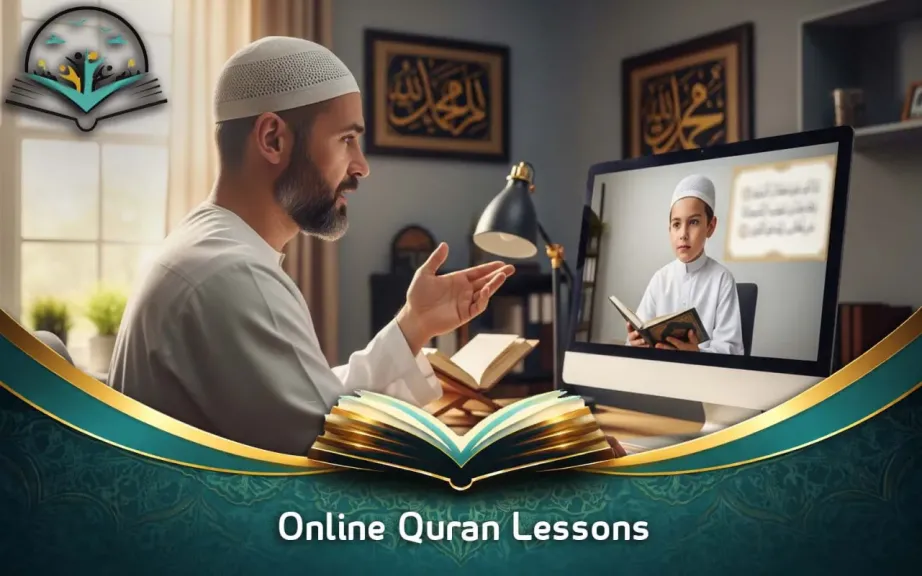
Most families start their child’s Islamic education with a single goal in mind, usually recitation, and figure the rest will follow naturally as the child gets older. Sometimes it does. More often, a child ends up with strong recitation skills and a fairly patchy understanding of everything else, simply because nobody planned for those other pieces to be taught deliberately.
The gap tends to show up gradually rather than all at once. A ten-year-old who recites fluently but can’t explain basic Islamic manners, or a teenager who’s memorized several surahs but never studied even a simplified introduction to tafsir, isn’t unusual. It’s just what happens when a curriculum is built around one skill instead of a fuller picture.
Starting With Structured Recitation
Consistent online Quran lessons still form the foundation of most programs, and that makes sense. Recitation is the skill a child uses every day, in prayer and outside it, so it’s reasonable that it gets the most attention early on. The mistake is treating it as the entire curriculum rather than the starting point for everything else.
Pacing matters more here than people usually plan for. A child who’s rushed through recitation without solid tajweed habits often ends up needing to unlearn mistakes later, which takes longer than getting it right the first time would have. A patient teacher who prioritizes accuracy over speed in the early months tends to save a family a lot of frustration a year or two down the line.
Adding Islamic Studies Alongside Recitation
Structured Islamic classes for kids fill in a lot of the context that recitation alone doesn’t cover, things like basic manners, the reasoning behind everyday practices, and simple history that gives a child something to connect their memorized verses to. Kids who understand the why behind a practice tend to hold onto it more naturally than kids who were just told to do it.
This subject works best taught by someone who genuinely enjoys working with children rather than a general instructor handling it as an afterthought squeezed between other subjects. The format matters too. Short stories, simple discussion, and age-appropriate examples tend to land far better with young children than a lecture-style class borrowed from an adult curriculum.
Introducing Basic Tafsir at the Right Age
For older children, a simplified Quran tafsir course online can start bridging the gap between memorized sound and actual understanding, though timing matters here more than with the other subjects. Introducing tafsir too early, before a child has enough Arabic vocabulary or general comprehension, usually leads to confusion rather than insight.
Most schools recommend waiting until a child has a solid recitation foundation and some basic Arabic before layering in tafsir study, and even then keeping the material simple and story-driven rather than diving into detailed scholarly analysis meant for adult students. A good teacher will adjust the depth of explanation based on what a specific child can actually follow, rather than using one fixed script for every age group.
Questions Worth Asking Before Enrolling
It helps to ask a school directly how it coordinates across these three subjects when different teachers are involved. A program where the recitation teacher, the Islamic studies teacher, and eventually the tafsir teacher actually communicate about a child’s progress tends to build a more coherent education than one where each subject runs in complete isolation from the others.
Age-appropriateness deserves a direct question too, rather than an assumption. Ask specifically how a school adjusts its Islamic studies and tafsir material for different ages, and whether a six-year-old and a twelve-year-old would genuinely be taught differently or simply handed the same content at different speeds.
It’s also worth asking how a school handles a child who’s ready to move faster in one subject than another. Some children pick up recitation quickly but need more time with Islamic studies material, or the reverse, and a program flexible enough to let subjects progress at slightly different paces for the same child tends to serve families better than a rigid, lockstep curriculum.
Sequencing the Whole Curriculum
None of these three subjects needs to wait for the others to finish. Most families find success layering them in gradually, starting recitation early, adding Islamic studies once a child has enough attention span for a second weekly subject, and introducing tafsir later once the first two are reasonably established.
What ties the whole plan together is treating it as one connected curriculum rather than three unrelated classes competing for the same limited hours in a child’s week. A school that plans across all three subjects together, even if different teachers handle each one, tends to produce children with a much more complete relationship to their faith than a program focused narrowly on recitation speed alone.